
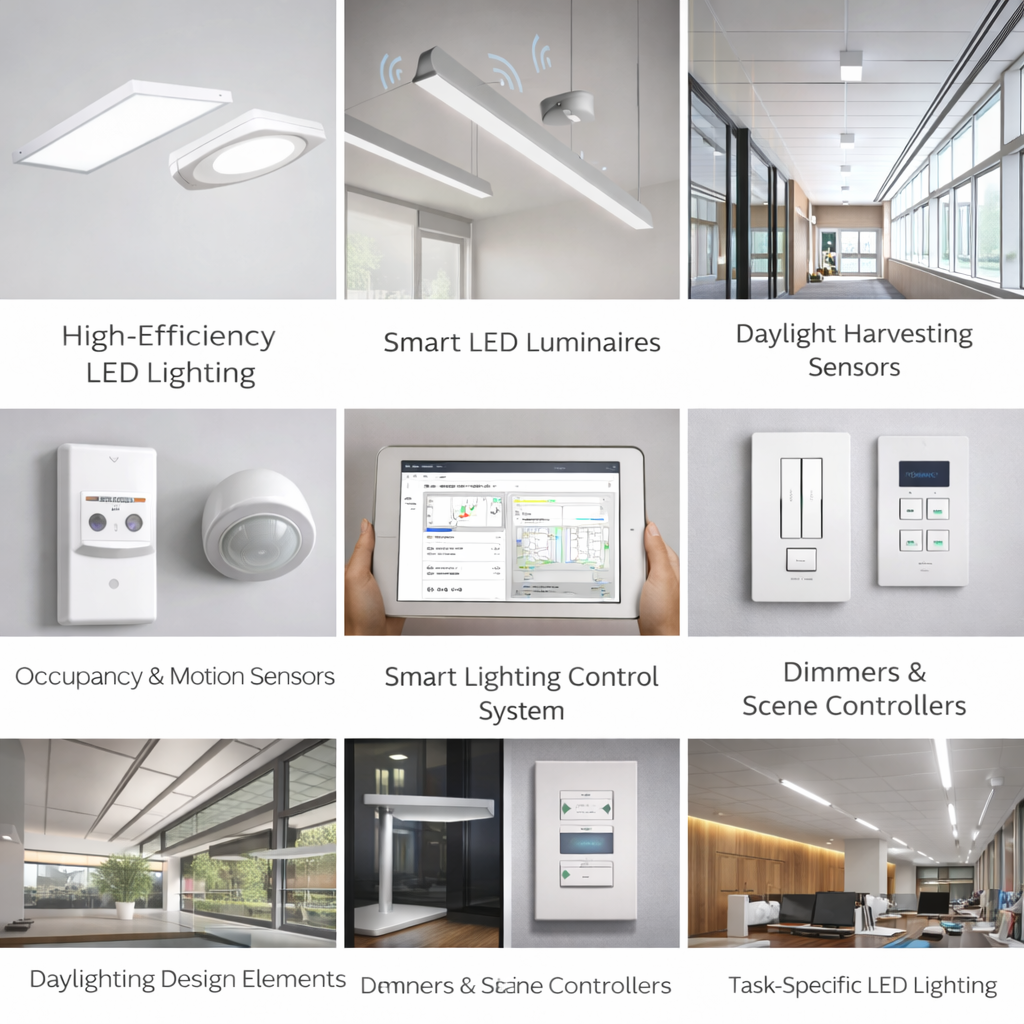
Overview: Improving lighting in sustainable buildings means using smart technologies and design to drastically cut energy use, primarily through LEDs, daylight harvesting, occupancy sensors, and smart controls to maximize natural light while minimizing artificial light needed, saving costs, reducing carbon footprints, and boosting occupant comfort.
Key Strategies for Lighting Efficiency
- LED Technology: Replacing older bulbs with Light Emitting Diodes (LEDs) is crucial, as they use up to 75-90% less energy and last significantly longer than incandescent bulbs, offering quick ROI.
- Daylight Harvesting: Sensors detect natural light levels and automatically dim or turn off electric lights, reducing reliance on artificial lighting during the day.
- Smart Controls: Occupancy sensors turn lights off in empty rooms, while dimmers and automated scheduling adjust brightness and timing, ensuring light is used only when and where needed.
- Optimized Design: Strategic window placement, light shelves, and efficient glazing maximize natural light penetration, while LED fixtures provide precise, directed light, reducing over-lighting.
- Task-Specific Lighting: Providing appropriate light levels for specific tasks (e.g., dimming hallways, brighter task lighting) saves energy compared to uniformly bright spaces.
Benefits of Sustainable Lighting
- Energy Savings: Lower electricity consumption, leading to reduced operating costs.
- Reduced Carbon Footprint: Less energy demand means lower greenhouse gas emissions.
- Improved Occupant Well-being: Natural light and better quality artificial light enhance mood, focus, and productivity.
- Design Flexibility: Creates more appealing and dynamic indoor environments.
By integrating these solutions, sustainable buildings significantly lower their energy consumption, contributing to both environmental goals and occupant satisfaction.