
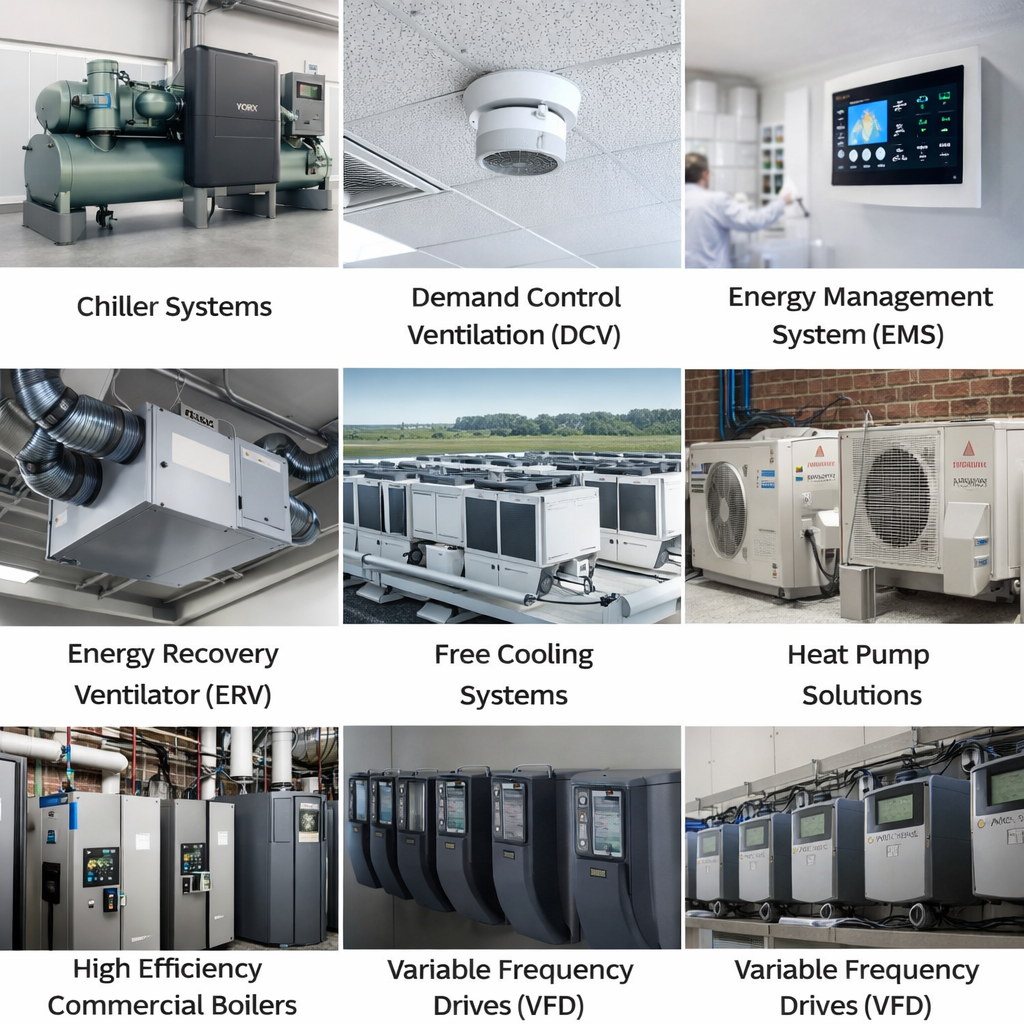
Overview: Upgrading heating and cooling (HVAC) for energy efficiency means replacing old systems or components with high-efficiency ones, using smart controls, and improving ductwork to significantly cut energy use, lower utility bills, enhance comfort (better temp/humidity control), improve indoor air quality, and reduce environmental impact, often involving technologies like heat pumps or smart thermostats for major savings.
Key Upgrades & Technologies:
- High-Efficiency Equipment: Replacing old furnaces, boilers, or AC units with ENERGY STAR certified models, heat pumps, or inverter-driven systems that adjust speed to demand, saving substantial energy.
- Smart Thermostats: Programmable or Wi-Fi-enabled devices that learn habits and automatically adjust temperatures, saving up to 10-15% on heating/cooling costs.
- Duct Sealing & Insulation: Sealing leaks with mastic or foil tape and insulating ducts (especially in attics/crawlspaces) prevents significant air loss (up to 20-60%).
- Heat Pumps: Highly efficient, dual-purpose systems for both heating and cooling, often replacing fossil fuel systems for major reductions in energy use and emissions.
- Variable-Speed Systems: Instead of cycling on/off at full power, these adjust output to match needs, providing consistent comfort and efficiency.
Why Upgrade?
- Lower Bills: Modern equipment and controls use less energy for the same comfort.
- Improved Comfort: More consistent temperatures, fewer hot/cold spots, and better humidity control.
- Better Air Quality: Upgrades can improve ventilation and filtration, reducing pollutants.
- Environmental Benefits: Reduced energy consumption lowers your carbon footprint.
- Increased Property Value: Modern, efficient systems are attractive to buyers.
How It Works (Example):
Instead of an old furnace running at 100% capacity, a new heat pump with smart controls might run at 30-50% capacity, precisely matching the home’s needs, using less electricity or gas overall, especially when paired with sealed ducts and a smart thermostat.