
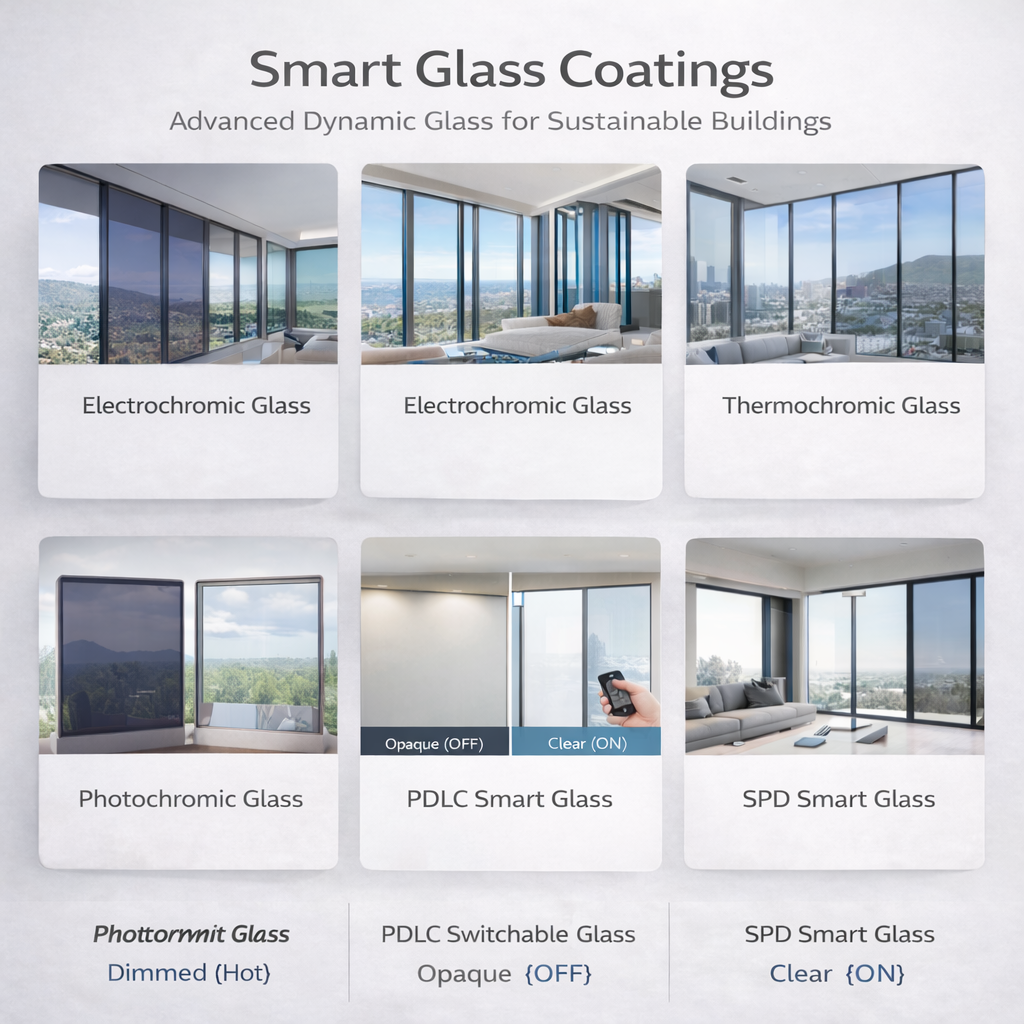
- Overview: Glass coatings :Glass coatings in smart coatings are advanced, dynamic materials used in sustainable buildings that can change their properties (tint, opacity, or heat transmission) in response to external stimuli like electricity, light, or temperature. They play a crucial role in enhancing energy efficiency and occupant comfort by actively managing the building’s interaction with the environment.
- Role in Sustainable BuildingsEnergy Efficiency:
- Smart glass coatings significantly reduce a building’s reliance on artificial heating, cooling (HVAC), and lighting systems by controlling solar heat gain and maximizing natural light. Studies have shown potential energy savings of up to 30%.
- Thermal Comfort: They help maintain stable indoor temperatures by blocking excessive heat in the summer and retaining warmth in the winter, leading to a more comfortable and productive indoor environment.
- Reduced Carbon Footprint: By lowering energy consumption, these coatings decrease the greenhouse gas emissions associated with building operations.
- Enhanced Daylighting and Glare Control: They allow optimization of natural light, reducing the need for artificial lighting while simultaneously controlling glare, which improves visual comfort for occupants.
- Aesthetics and Design Flexibility: Smart glass eliminates the need for physical blinds or curtains, allowing architects to design open, light-filled facades and flexible interior spaces.
- Durability and Low Maintenance: These coatings are durable, resist UV exposure and environmental wear, and require minimal maintenance compared to traditional shading systems, which aligns with long-term sustainability goals.
- Types of Smart Glass Coatings:
Smart glass coatings are generally categorized into two main types: passive (automatic response) and active (user-controlled, typically requiring an electrical current).
- Electrochromic (EC) Glazing: This is an active technology where applying a low-voltage electrical current changes the color or tint of the glass gradually. It requires power only during the transition (minutes) but maintains the desired shade with little to no continuous power.
- Thermochromic Glazing: A passive technology that responds automatically to changes in ambient temperature. The coating changes from transparent to tinted (or opaque) when the temperature rises above a certain threshold, blocking heat, and returns to clear when it cools down.
- Photochromic Glazing: A passive technology that reacts to light intensity (specifically UV rays), darkening when exposed to strong sunlight and becoming clear in low light.
- Polymer Dispersed Liquid Crystal (PDLC): An active technology, often used for privacy, that switches almost instantly from a translucent/opaque state (randomly arranged crystals without power) to a transparent state (aligned crystals with power).
- Suspended Particle Devices (SPD): Another active technology where a film of rod-like nanoparticles aligns under voltage to let light through, and blocks light when the power is off. This allows for precise, variable control of tint and heat in real-time.
These smart coatings are instrumental in transforming the building envelope into a dynamic, climate-adaptive system, making buildings more responsive to their environment and helping them achieve rigorous green building certifications like LEED and BREEAM.