
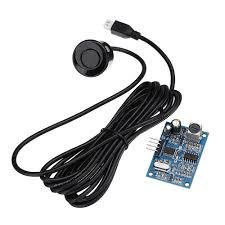
Overview: Ultrasonic sensors in smart buildings and IoT are advanced, non-contact devices that use high-frequency sound waves (above 20 kHz) to detect the presence, proximity, or distance of objects, liquids, or people. Functioning as the “eyes and ears” of IoT, these sensors measure the time-of-flight (ToF) of sound waves—emitting a pulse and measuring the time it takes for the echo to return—to provide real-time, accurate data. In smart building IoT, they are used to automate systems, optimize resource usage, and enhance safety by operating reliably regardless of lighting conditions, color, or dust.
Key Applications of Ultrasonic Sensors in Smart Buildings
- Occupancy Detection & Energy Efficiency: Ultrasonic sensors detect movement to identify if a room is occupied. They are used to turn off lights, HVAC systems, and appliances in empty rooms, significantly reducing energy consumption.
- Smart Waste Management: Installed in waste bins and dumpsters, these sensors monitor fill levels in real-time, allowing sanitation systems to optimize collection schedules, prevent overflows, and reduce operational costs.
- Smart Parking Systems: These sensors are used in parking garages to detect whether a spot is occupied or vacant, guiding drivers to available spots and enhancing traffic flow.
- Smart Water Tank Level Management: Ultrasonic sensors continuously monitor water levels in storage tanks, preventing overflows or dry-run conditions by automatically triggering pumps.
- Automatic Door and Security Systems: They act as sensors in automated doors and as motion detectors in security systems, detecting individuals without needing a clear line of sight and triggering alarms.
- Sewer and Flood Monitoring: In smart city infrastructure, these sensors monitor water depth in sewers to detect blockages or predict potential flooding.
Role and Benefits in IoT and Smart Buildings
- Non-contact Measurement: They measure distance without physical contact, making them ideal for monitoring liquid levels without risking contamination.
- High Reliability: They perform effectively in harsh, dark, or dusty environments where cameras or infrared sensors might fail.
- Internet Connectivity (IoT): When connected to IoT platforms (via Wi-Fi, LoRaWAN, etc.), they send real-time, actionable data to cloud-based dashboards for analytics and automated decision-making.
- Cost-Effective & Durable: They are low-cost, low-maintenance, and have long lifespans, with some models designed with self-cleaning capabilities to handle condensation or dust.
Ultrasonic sensors are considered essential for building automation, specifically because they are effective at detecting objects and people, regardless of the material or surface propertie