
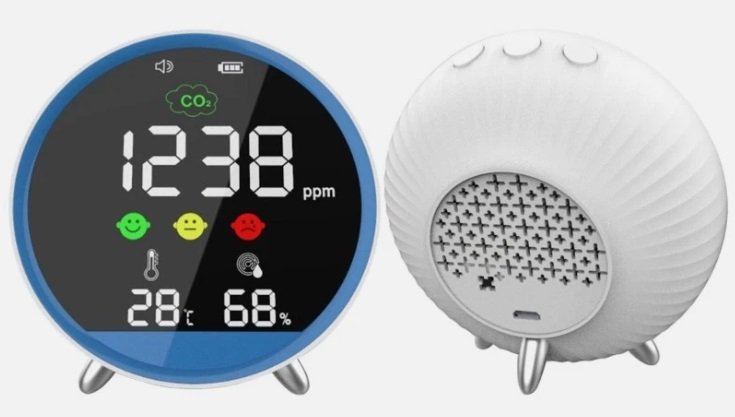
Overview: CO2 sensors in smart buildings are IoT-enabled devices that continuously monitor indoor air quality by measuring carbon dioxide concentration (typically 400–3000+ ppm). They enhance occupant health and productivity by triggering HVAC systems to increase fresh air when levels are high, simultaneously optimizing energy efficiency via demand-controlled ventilation (DCV).
Key details regarding CO2 sensors in smart buildings:
Technology: They often use advanced sensing technologies (e.g., NDIR sensors or LoRaWAN connectivity) to provide accurate, real-time data to facility managers.
Purpose: These sensors detect high CO2 levels caused by high occupancy, which can lead to headaches, fatigue, and reduced cognitive performance.
Functionality: They serve as a proxy for occupancy, allowing Building Automation Systems (BAS) or HVAC systems to adjust ventilation in real-time, reducing energy consumption by not over-ventilating empty rooms.
Applications: They are commonly installed in schools, offices, and conference rooms to maintain optimal air quality, often displaying data visually or feeding it into a smart management system.