
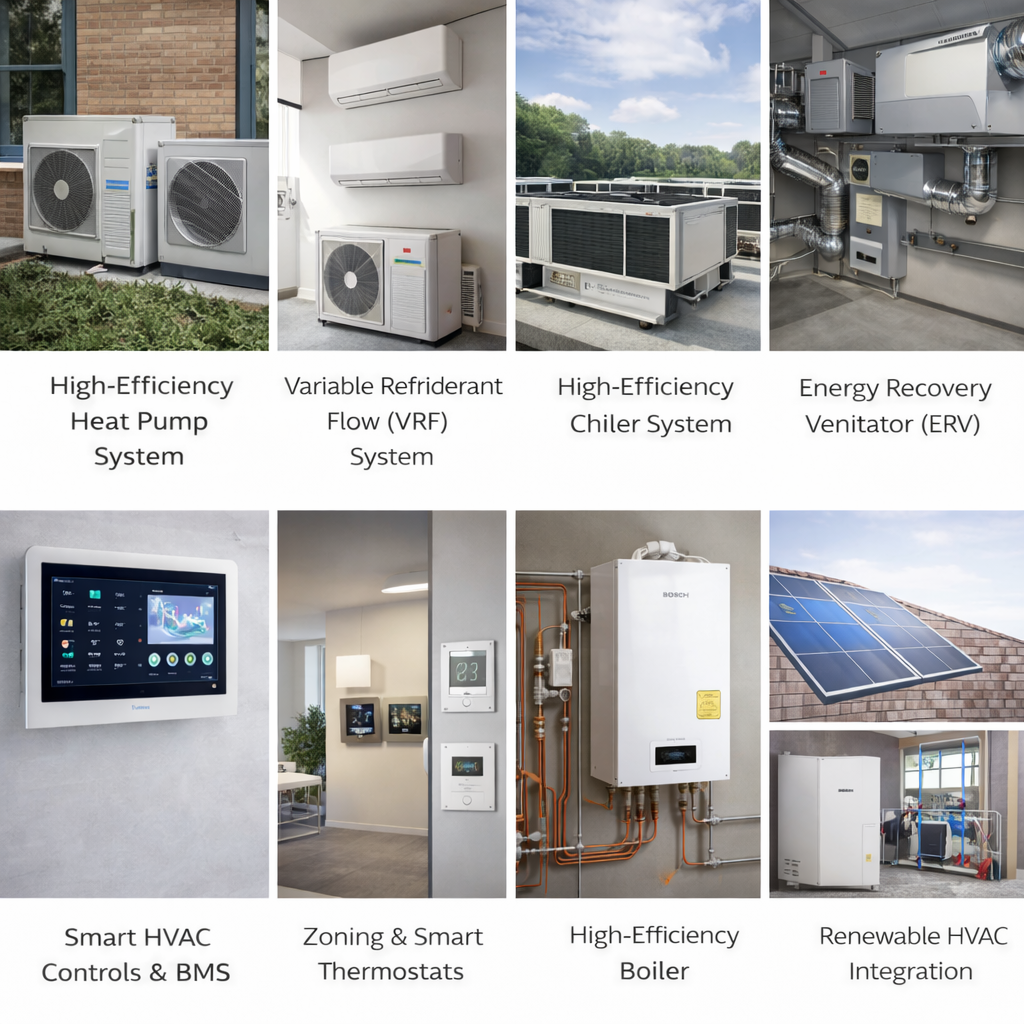
Overvew: Upgrading HVAC systems in sustainable buildings means replacing old, inefficient heating, ventilation, and air conditioning with modern, smart technologies (like VRF, heat pumps, smart controls) to drastically cut energy use, lower utility costs, reduce carbon footprints, and improve indoor air quality (IAQ) and comfort for occupants, making buildings greener and more cost-effective. It involves strategic retrofits and new installations focused on lifecycle efficiency, integrating renewables, and using automation to adapt to real-time conditions, essential for achieving modern green building standards.
Key Technologies & Strategies in Upgrades:
- High-Efficiency Equipment: Installing modern chillers, boilers, and heat pumps that provide more heating/cooling with less energy.
- Variable Refrigerant Flow (VRF): Systems that precisely control heating/cooling to occupied zones, avoiding waste.
- Smart Controls & Building Automation (BMS): Using sensors, AI, and automation to adjust settings based on occupancy, weather, and time, optimizing energy use.
- Energy Recovery Ventilators (ERVs): Recapture energy from exhaust air to pre-condition incoming fresh air.
- Zoning & Smart Thermostats: Granular control for different areas, preventing energy waste in empty rooms.
- Renewable Integration: Pairing systems with solar or geothermal sources for further emissions reduction.
Benefits in Sustainable Buildings:
- Lower Energy Consumption & Costs: Significant reduction in utility bills.
- Reduced Carbon Footprint: Decreased reliance on fossil fuels and lower GHG emissions.
- Improved Occupant Health & Comfort: Better air filtration, humidity control, and consistent temperatures.
- Extended Equipment Life & Reduced Maintenance: Modern systems often last longer and require less upkeep.
- Compliance & Value: Helps meet strict energy codes, ESG goals, and increases building value.
Why Upgrade?
Buildings are major energy consumers, and outdated HVAC is a primary culprit, contributing to high costs and environmental impact. Upgrading bridges the gap for older buildings, making them environmentally responsible, healthier, and economically viable for the long term.