
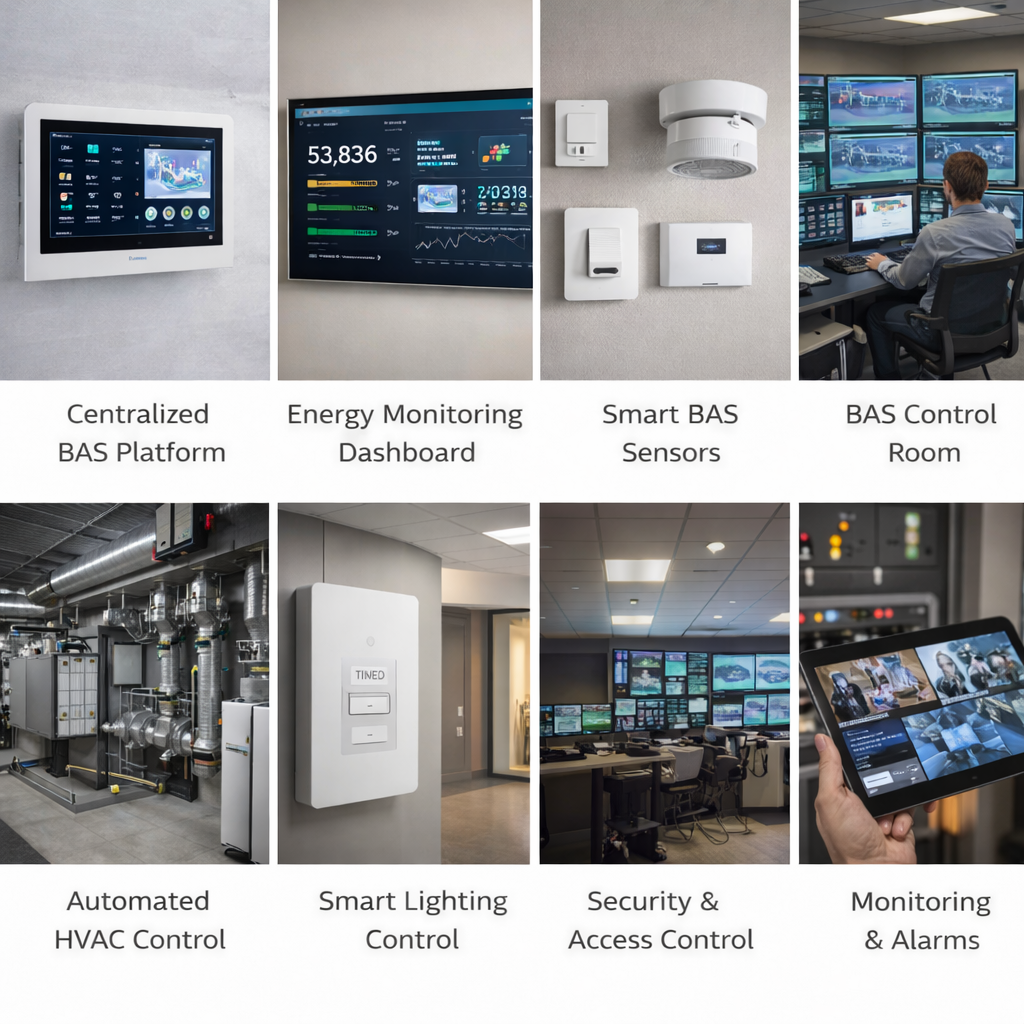
Overview: Installing Building Automation Systems (BAS) in sustainable buildings integrates and centrally controls HVAC, lighting, security, and other systems using sensors and software to optimize energy use, reduce costs, and improve comfort by reacting to occupancy, weather, and energy prices in real-time, making buildings smarter and more efficient. This automation minimizes wasted energy by turning systems off or adjusting settings automatically, leading to significant energy savings and a greener footprint.
How BAS Works for Energy Efficiency
- Centralized Control: A single platform manages all mechanical and electrical equipment, replacing manual adjustments.
- Data-Driven Optimization: Sensors gather data (occupancy, light levels, temperature) and controllers make real-time decisions to adjust systems.
- Smart Scheduling: Systems operate only when needed, turning off lights or reducing HVAC in unoccupied areas.
- Predictive Adjustments: Responds to changing daylight, occupancy patterns, and even energy prices.
Key Benefits in Sustainable Buildings
- Reduced Energy Consumption: Significantly lowers electricity and thermal energy use.
- Lower Operating Costs: Decreases energy bills and maintenance needs.
- Enhanced Occupant Comfort: Maintains optimal temperature and lighting, boosting productivity.
- Improved Sustainability: Creates “smart buildings” with a lower environmental impact.
Examples of BAS Functions
- HVAC: Automatically adjusts heating and cooling based on occupancy and outdoor conditions.
- Lighting: Dims or turns off lights when rooms are empty or natural light is sufficient.
- Security & Access: Integrates access control with other systems for better management.
- Monitoring & Alarms: Detects system failures and alerts maintenance staff.