
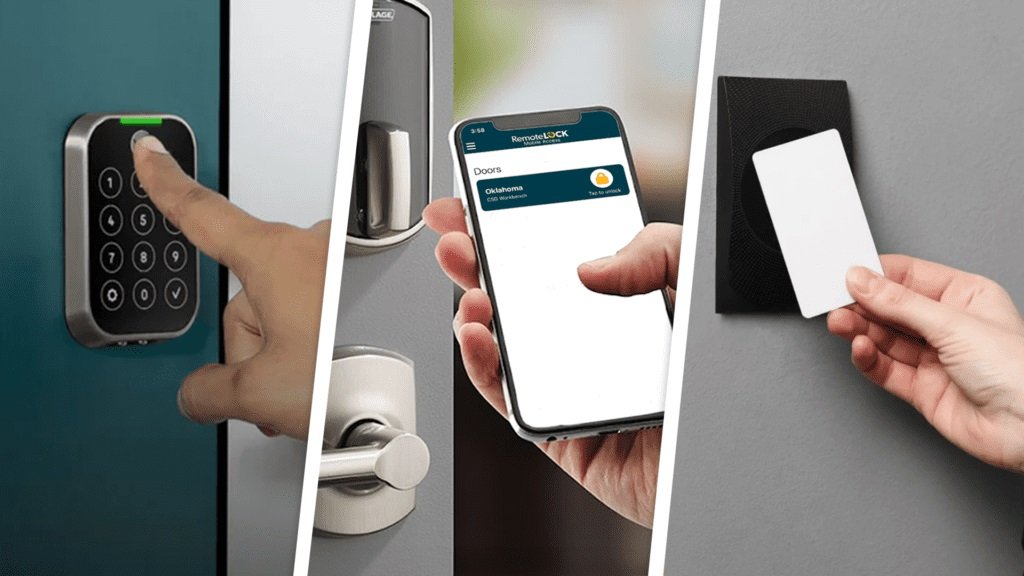
Overview: Smart Locks and Keyless Entry in Building Automation Systems replace physical keys with digital credentials (PINs, apps, biometrics) for secure, convenient access, integrating with a building’s network to offer remote management, access logs, and automated functions like granting temporary guest access or controlling HVAC, enhancing security and operational efficiency in smart buildings.
How They Work
These systems use various technologies to verify identity and unlock doors:
- PIN Codes: Users enter a memorized code on a keypad.
- Mobile Access: Smartphones communicate via Bluetooth, Wi-Fi, NFC, or Z-Wave to grant entry.
- Biometrics: Fingerprint, facial, or palm scans confirm identity.
- Key Cards/Fobs: RFID or NFC cards/fobs are used for quick access.
- Intercom/Video: Remote staff can grant access to visitors after visual verification.
Integration in Building Automation Systems (BAS)
- Centralized Control: Locks connect to the BAS, allowing managers to control access for the entire building from a single interface.
- Remote Management: Grant or revoke access, create temporary codes, and monitor entry/exit logs from anywhere.
- IoT Connectivity: Communicate via protocols like Wi-Fi, Zigbee, or Z-Wave to interact with other smart devices.
Benefits in Smart Buildings
Seamless Experience: Can trigger other automation events, like turning on lights or adjusting thermostats as someone enters.
Enhanced Security: Real-time monitoring, audit trails, and instant access revocation reduce risks.
Improved Convenience: No lost keys; seamless access via smartphone; easy guest management.
Operational Efficiency: Automate access for maintenance, delivery personnel, and residents.
Data & Analytics: Gain insights into building usage patterns through entry data.