
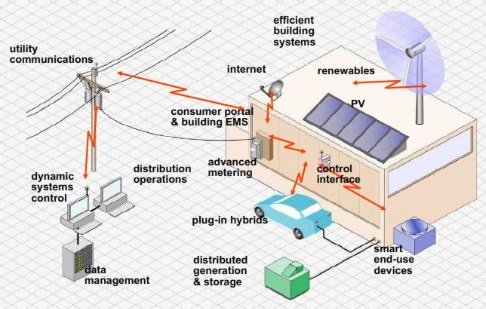
Overview: Demand Response Systems in Demand Response (DR) systems in smart Building Automation Systems (BAS) allow buildings to automatically adjust energy use in response to grid signals (price, reliability), turning them from passive consumers into active grid assets that can save costs and support grid stability, especially with renewables, by integrating with smart grid tech like OpenADR for automated load shifting (e.g., pre-cooling when cheap, curtailing during peak).
How it Works in Smart Buildings
- Grid Communication: Utility signals (price spikes, reliability alerts) are sent to the building’s BAS via standards like OpenADR (Open Automated Demand Response).
- BAS Integration: The building automation system (BAS) receives these signals, analyzes them, and adjusts connected systems (HVAC, lighting, storage).
- Automated Response: Instead of manual intervention, the BAS automatically implements pre-defined strategies, like pre-cooling before peak hours or reducing non-essential loads, without sacrificing comfort.
Key Components & Technologies
- Building Automation System (BAS): The central control system for HVAC, lighting, etc..
- OpenADR: An open standard enabling automated, two-way communication between the grid and buildings for DR.
- IoT & AI: Internet of Things sensors and AI algorithms provide data and intelligence for optimized control.
- Distributed Energy Resources (DERs): Integration with on-site solar, storage, and EV chargers for greater flexibility.
Benefits for Buildings & the Grid
- Cost Savings: Reduce energy bills by shifting consumption to off-peak, lower-cost times.
- Revenue Generation: Earn incentives or payments for providing grid services.
- Grid Stability: Help balance supply and demand, prevent blackouts, and integrate more renewable energy.
- Enhanced Efficiency: Turns buildings into flexible energy assets, reducing overall system stress.
Example Scenario
During a hot summer afternoon when grid demand peaks, the utility sends a DR signal. The smart building’s BAS receives it, automatically reduces the setpoint for HVAC, dims some lights, and draws from its battery storage, all while maintaining comfortable indoor conditions and reducing peak energy draw.