
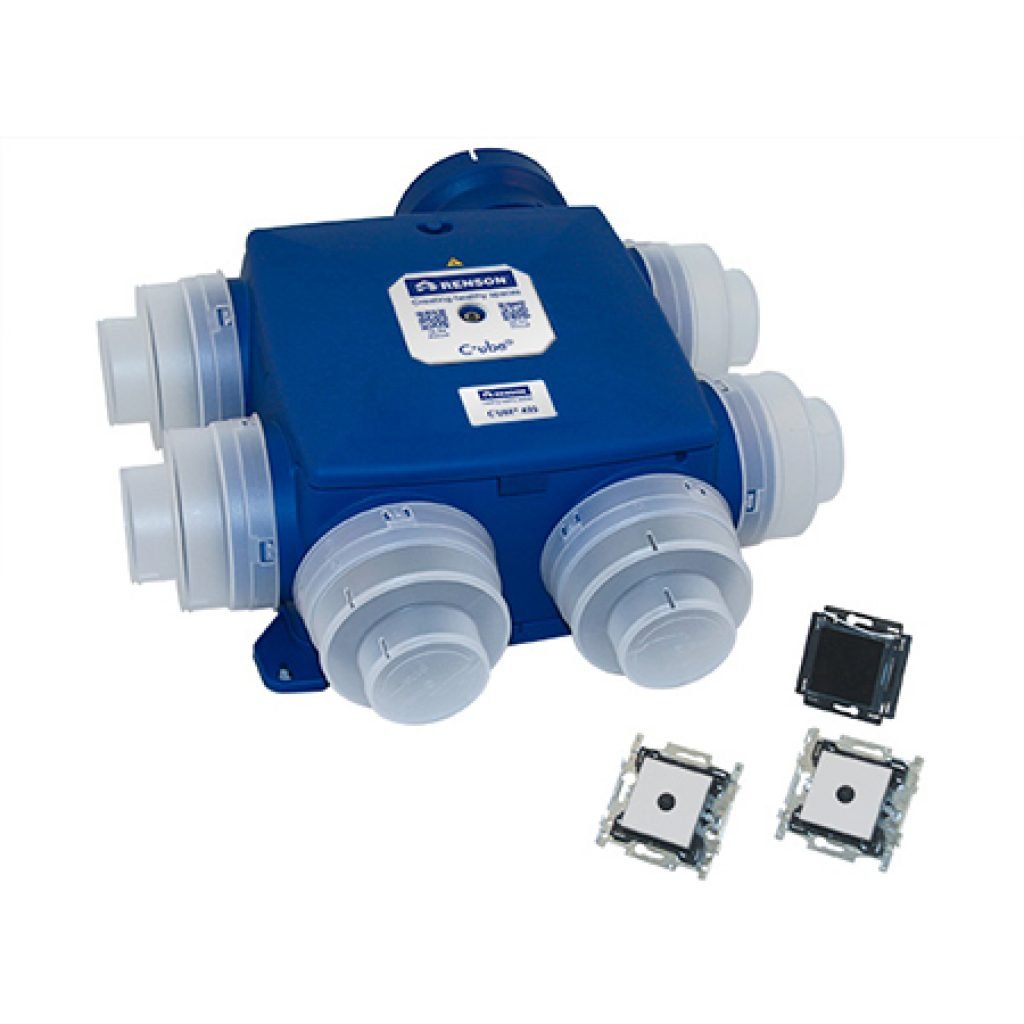
OverView: Demand-Controlled Ventilation (DCV) in a Building Automation System (BAS) for smart buildings dynamically adjusts outdoor air supply based on real-time occupancy (often via CO2 sensors) to maintain air quality (IAQ) and save energy, moving beyond fixed schedules to provide fresh air only when needed, reducing HVAC load, cutting costs, and enhancing occupant comfort in spaces like classrooms or auditoriums.
How DCV Works with a BAS
- Sensing: Smart sensors (CO2, occupancy, temperature) continuously monitor indoor conditions in various zones.
- Data Analysis: The BAS collects this data, identifying actual occupancy levels and air quality.
- Control Adjustment: Instead of constant full ventilation, the BAS adjusts the fresh air dampers, increasing or decreasing outside air intake proportionally to the measured demand (e.g., higher CO2 means more fresh air).
- Integration: The BAS integrates this with other systems (lighting, heating) for holistic optimization.
Key Benefits
- Energy Savings: Reduces the energy needed to heat, cool, and humidify unnecessary fresh air.
- Improved IAQ: Ensures healthy indoor air by delivering fresh air based on actual need, preventing stale air.
- Occupant Comfort: Maintains consistent, comfortable conditions, boosting productivity.
- Extended Equipment Life: Less operation means less wear and tear on HVAC systems.
- Smart Building Core: A key component of smart buildings, enabling responsive, efficient operations.
Common Applications
- Classrooms
- Auditoriums
- Lobbies
- Conference rooms
- Cafeterias
In essence, DCV in a BAS shifts ventilation from a fixed, often wasteful, schedule to a data-driven, demand-responsive strategy, making buildings more efficient and healthier.